
Custom website design cost is one of the first things business owners ask about, and the honest answer is rarely a single number. Two businesses can both ask for a “custom website” and receive quotes that look nothing alike. The reason is simple: the price follows the work, and the work changes from project to project. This guide explains what you are paying for, what moves the price, and how to plan a budget you can trust.
At AMC Digital, our team builds websites for small businesses, contractors, and startups across Tennessee. We see the same budget questions again and again, so we wrote down the answers.
What Does a Custom Website Design Service Include?
A custom site is designed and built around your business instead of a pre-made template. A full service package from a team that offers web design and development services usually covers:
- Discovery and strategy. Goals, audience, and a plan for what each page should do.
- Design. Layouts and mockups for desktop and mobile.
- Development. The actual build, including forms, navigation, and integrations.
- Content setup. Loading your text, images, and service pages.
- Testing and launch. Speed, mobile, and browser checks before going live.
- Handoff. Training on how to update your own site.
Custom Website Design Cost: 5 Factors That Change It
Five factors explain most of the difference between a low quote and a high one.
1. Design Complexity and Number of Pages
A five-page site for a local service company takes far less time than a 40-page site with unique layouts. More pages mean more design, more content, and more testing. Custom illustrations, animation, and detailed user flows add time too. Strong UI and UX design takes research and testing, but it pays off by guiding visitors toward calling you.
2. Features and Functionality
Basic sites show information. Advanced sites do things: book appointments, take payments, run customer portals, or connect to your CRM. Each feature needs building and testing. If your project looks more like software than a brochure, review our overview of web app development services, so you know what to expect.
3. Platform and Technology
Your platform shapes both the build and the long-term bill.
- WordPress offers flexibility and a large developer pool. Our guide on how to choose a WordPress development agency explains what to look for.
- Shopify suits online stores that need a proven checkout.
- Custom code gives full control for unique needs, but it usually takes the most time.
4. Content, Branding, and SEO Setup
A site needs words, photos, and a clear brand. If you already have a logo, copy, and professional photos, the project moves faster. If the agency writes content or builds your brand, the scope grows. SEO setup matters too. Page titles, headings, site structure, and speed all help search engines understand your pages, and Google’s own SEO starter guide shows the basics every site should cover.
5. Speed, Accessibility, and Ongoing Support
A fast, accessible site takes deliberate work. Google tracks real user experience through Core Web Vitals, and slow pages lose visitors. Accessibility matters as well. The Department of Justice publishes ADA guidance on web accessibility for businesses open to the public, and the WCAG guidelines describe the technical standard most teams follow. After launch, security updates, backups, and edits keep your site healthy, so ask about support plans up front.
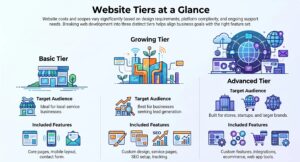
Website Tiers at a Glance
Website costs vary significantly based on design scope, features, platform, and ongoing support. These three tiers show how the scope grows:
| Tier | Best for | What it usually includes |
| Basic | Local service businesses | Core pages, mobile layout, contact form |
| Growing | Businesses that want leads | Custom design, service pages, SEO setup, tracking |
| Advanced | Stores, startups, and larger brands | Custom features, integrations, ecommerce, or web app tools |
Ask any agency to place your project in a tier and explain why.
Custom Design vs Template: Is Custom Worth It?
- Template: Lower upfront cost and a faster launch, but it looks like many other sites and can limit features.
- Custom: Higher upfront cost, but it matches your brand, supports your exact goals, and grows with your business.
If your website is your main sales tool, custom design usually earns its price. If you only need a simple online presence, a template may be enough.
How to Plan Your Budget
- Define your goal. Calls, bookings, or online sales each need different features.
- List must-haves and nice-to-haves. Launch with the first list and add the second later.
- Budget beyond launch. Hosting, your domain, maintenance, and marketing continue after day one.
- Consider phases. A smaller first version can cut upfront cost, as long as it is built to grow.
- Plan for traffic. A great site still needs visitors, so include SEO or ads in your plan.
How to Compare Agency Quotes
Two quotes can look far apart because they cover different work. Put them side by side and check:
- What is included, such as strategy, content, SEO setup, and training.
- How many revision rounds you get.
- Who owns the site and files after launch.
- What support costs after launch.
- Whether the portfolio shows work like yours.
Our article on the key factors when hiring a web design agency goes deeper on how to judge a team. Be careful with quotes that are far below the rest. A very low price often means a template, a rushed process, or missing pieces.
Frequently Asked Questions
Q. How long does a custom website take to build?
A. Most small business sites take several weeks. Larger sites with custom features can take a few months. Clear content, quick feedback, and a defined scope keep the schedule on track.
Q. Is a custom website better than a template?
A.Custom design fits your brand and goals and can scale with you. A template costs less and launches faster. Choose custom if your site must stand out or support special features.
Q. Do I pay for hosting and maintenance separately?
A. Usually yes. Hosting, your domain, security updates, and backups are often ongoing costs outside the design fee. Ask each agency to list what the quote includes and what it leaves out.
Q. Why do quotes for the same website differ so much?
A. Scope, team experience, and inclusions drive the gap. One agency may add strategy, SEO setup, and support, while another only builds pages. Compare quotes line by line.
Q. Can I build my site in phases?
A. Yes. Many businesses launch core pages first and add booking or a store later. A phased plan lowers the upfront cost, as long as the first version is built to grow.
Ready to Plan Your Website?
A clear scope is the best way to control custom website design cost. Tell us about your business, your goals, and your timeline, and we will give you a straight answer. Request a free quote or call us at +19314165131.